
Welcome to SEDL's Free Resources
SEDL's library of free resources are resources that have been developed and field-tested with our partner schools, districts, and communities.
Our 20 Most Recent Resources
|
College- and Career-Readiness Standards and Assessment Resource List (Summer 2016) (2016) This biannual update provides a list of resources that focus on college- and career-readiness standards and assessment. |
 |
|
College- and Career-Readiness Standards and Assessment Resource List (Winter 2015–16) (2016) This biannual update provides a list of resources that focus on college- and career-readiness standards and assessment. It includes materials from the federal content centers, comprehensive centers, and regional educational laboratories, as well as other organizations with expertise in education policy, research, and technical assistance. |
 |
|
College- and Career-Readiness Standards and Assessment Resource List (2015) This biannual update provides a list of resources that focus on college- and career-readiness standards and assessment. It includes materials from the federal content centers, comprehensive centers, and regional educational laboratories, as well as other organizations with expertise in education policy, research, and technical assistance. |
 |
|
SEDL Insights, Vol. 3, No. 1: Teaching Content-Area Literacy and Disciplinary Literacy (2015) This issue of SEDL Insights focuses on two types of literacy that are crucial to helping students become college and career ready: content-area literacy and disciplinary literacy. |
 |
|
Supporting High-Quality Rural Education (2014) The Southeast Comprehensive Center (SECC) and the Texas Comprehensive Center (TXCC) at SEDL are hosting the Regional Institute, Supporting High-Quality Rural Education, at the Embassy Suites Austin - Central Hotel in Austin, Texas, on November 5–7, 2014. |
 |
|
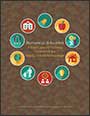
Partners in Education: A Dual Capacity-Building Framework for Family–School Partnerships (2014) This resource presents a new framework for designing family engagement initiatives that build capacity among educators and families to partner with one another around student success. Based in existing research and best practices, this report is designed to act as a scaffold for the development of family engagement strategies, policies, and programs. |
 |
|
SEDL Insights, Vol. 1, No. 4: Teaching Mathematics Conceptually (2014) Mathematics instruction in the United States has historically focused on procedures, facts, and algorithms. Because of that focus, mathematics instruction, in essence, becomes lessons in arithmetic and efficiency. While there are promising changes occurring in mathematics instruction, we still need to help both teachers and students develop a more conceptual understanding of mathematics. This issue of SEDL Insights helps educators shift from helping students memorize rules to facilitating a deeper understanding of mathematics concepts. |
 |
|
SEDL Insights, Vol. 2, No. 1: Building Supportive Relationships in Afterschool (2014) Afterschool programs can help students develop knowledge to enhance academic success while also providing them with opportunities to develop social and problem-solving skills. In our work with afterschool programs, we have seen that positive relationships with school-day personnel, families, community members, and between and among program staff and students help these programs thrive. This issue of SEDL Insights explores how afterschool practitioners can build strong relationships that benefit all stakeholders. |
 |
|
SEDL Insights, Vol. 2, No. 2: How Districts Can Lay the Groundwork for Lasting Family Engagement (2014) Family engagement in a student’s education can lead to improved student academic achievement, attendance, and behavior. Yet many districts and schools still struggle to form strong partnerships with the families they serve. Having a supportive district-level infrastructure is key to the success and sustainability of family engagement initiatives. |
 |
|
SEDL Insights, Vol. 2, No. 3: Implementing Effective Professional Learning Communities (2014) “Professional learning communities,” the name given to teachers’ collaborative professional learning—or PLCs, as they are often called—has become so overused that we often don’t think about the term’s meaning. Only when teachers reflect on their instructional practice, consider the impact instruction has on students, and implement insights gained from a meeting to improve their teaching performance, can this process be called a professional learning community. This issue of SEDL Insights explores ways that education leaders can guide their staff in the implementation of effective PLCs. |
 |
|
Common Core State Standards Video Series: ELA (2013) The Common Core State Standards (CCSS) videos are designed to support states, schools, and teachers in the implementation of the CCSS. Each video is an audiovisual resource that focuses on one or more specific standards and usually includes examples and illustrations geared to enhancing understanding. |
 |
|
FOCUS - Technical Brief Number 37: Lessons Learned in Technology Transfer from Dr. Gregg Vanderheiden and the Trace Research & Development Center (2013) This FOCUS Technical Brief describes the exemplary technology transfer (TT) and knowledge translation (KT) work of the 2013 winner of the Center on KT4TT's Product Utilization Support and Help (PUSH) Award. The recipient is Dr. Gregg Vanderheiden and the Trace Research & Development Center at the University of Wisconsin-Madison. |
 |
|
Identifying Competencies and Actions of Effective Turnaround Principals: Southeast Comprehensive Center Briefing Paper, January 2013 (2013) Research over the past 30 years has found that effective principals can significantly improve various components of student achievement and learning. In addition, there are few examples of improving student achievement that were not led by an effective principal. Research has also identified the need for the change to be systemic or comprehensive in the school turnaround process to ensure sustainability. Along with a systemic improvement process, Duke (2006), identifies 10 “essential” school components for the turnaround principal’s focus and action as keys to sustained success for the benefit of all students. This briefing paper addresses the essential competencies and actions of the turnaround principal. |
 |
|
Knowledge Translation: From Research to Vocational Rehabilitation Service Delivery (2013) Should practice guidelines be developed for vocational rehabilitation (VR) service delivery? This webcast will be a discussion with a rehabilitation researcher, a VR educator, and a VR practitioner around practice guidelines: what they are, how they are developed in other disciplines, and if they could be helpful to VR counselors and consumers. |
 |
|
SEDL 2013 Annual Report: Evidence to Practice (2013) |
 |
|
SEDL Insights, Vol. 1, No. 1: Leadership Actions for Transforming Schools (2013) Effective leadership is a crucial part of school improvement. Yet leaders at schools in the process of transformation often struggle with how to best guide their staff and students to better outcomes. Our experiences serving as turnaround principals in Texas and South Carolina and then working with underperforming schools while at SEDL have revealed insights on the core actions that leaders take in successfully leading school transformations. These actions can create the conditions needed to shape a school culture where teaching and learning can improve. |
 |
|
SEDL Insights, Vol. 1, No. 2: Managing the Implementation of School Improvement Efforts (2013) For a school improvement initiative to succeed, education leaders must do more than adopt a new program and train staff. This issue of SEDL Insights explores steps that leaders can take to ensure the successful implementation of a new program or practice. |
 |
|
SEDL Insights, Vol. 1, No. 3: Increasing the Effectiveness of Literacy Coaches (2013) Many districts turn to literacy coaches to deliver professional development, follow-up, and support in implementing evidence-based instructional practices and programs. While literacy coaches offer an effective job-embedded professional learning mechanism for teachers, districts should also provide professional development opportunities for literacy coaches This issue of SEDL Insights how education leaders can help literacy coaches have the greatest impact at their schools. |
 |
|
Supporting Sustainability Efforts in School Turnaround (2013) Staff members from states in the Southeast Region met with their counterparts in the area of school turnaround and learned from experts in the field from the U.S. Department of Education and other organizations. |
 |
|
Common Core State Standards Video Series: Mathematics (2012) The Common Core State Standards (CCSS) videos are designed to support states, schools, and teachers in the implementation of selected math standards. Each video is an audiovisual resource that focuses on one specific standard through examples and illustrations geared to enhancing understanding. |
 |