
A-Z List of Free SEDL Publications
Below is a list of SEDL publications available free online. There are additional publications available in the SEDL Store, where SEDL lists the publications available for sale.
There are 252 free resources available to you.
Click here to show publications starting with the letter or number:
A, B, C, D, E, F, G, H, I, J, K, L, M, N, O, P, R, S, T, U, V, W, Y
| Rapid Response: Career And Technical Education (2008) This resource was developed in response to a request: "A state department of education (SDE) served by the Southeast Comprehensive Center has requested that the SECC identify successful U.S. high schools that focus more on technical rather than traditional academic subjects. Also, the SDE would like information on the following: 1. Do these schools require Carnegie units? How are technical courses coded if Carnegie units are awarded? 2. How is credit given for technical job-training classes? 3. What types of terminal degrees are offered at these schools?  | 
|
| Rapid Response: Compensation Strategies to Address Teacher Shortages (2012) This resource was produced in response to a request from a state department of education (SDE) served by the Southeast Comprehensive Center (SECC) at SEDL that requested information regarding teacher shortages, specifically merit pay, compensation strategies, and other actions taken or under consideration by SDEs to address this issue. | 
|
| Rapid Response: Early Childhood Education Curricula and Programs for PreK Students (2008) This resource was produced by SEDL's Southeast Comprehensive Center (SECC) in response to a request from a state department of education for a list of research-based early childhood education curricula and programs for preK students that address both reading and math readiness. Additional discussion of early childhood curricula and related SECC work can be found in the SECC Spotlight newsletter. | 
|
| Rapid Response: Educating Overage Students (2008) This resource was produced in response to a request: "A state department of education would like information on how states are educating overage students who may be at least two grades behind and are at risk of dropping out of high school. In particular, some districts want to enroll students with their age group, in an alternative setting, or in a vocational program." | 
|
| Rapid Response: Professional Development Connected to Student Achievement in STEM Education (2012) The Southeast Comprehensive Center at SEDL produced this resource in response to a request by a state department of education for information about professional development for teachers on student achievement in science, technology, engineering, and mathematics (STEM) education. | 
|
| Rapid Response: Project-based Learning (2008) This resource was produced in response to a request: "How are states across the nation using project-based learning (PBL)? Has PBL been implemented in elementary, middle, and high schools? If so, when was it implemented, and what results have schools and districts experienced?" In response to this request, the Southeast Comprehensive Center (SECC) queried several state departments of education as well as the REL Southeast at the SERVE Center, the National High School Center, and the National Center for Research on Evaluation, Standards, and Student Testing (CRESST) to obtain information on the use of PBL in schools nationwide. | 
|
| Rapid Response: Response to Intervention (RtI) Policy (2009) In 2007, a state department of education served by the Southeast Comprehensive Center (SECC) requested information regarding state policies on RtI. SECC staff consulted the scholarly literature on education policy in the United States in order to provide a backdrop for discussion of state policies focused on RtI. Staff also reviewed the resources identified in a previous rapid response and conducted searches of state Web sites for revised or additional information regarding formal RtI policy. | 
|
| Rapid Response: Response to Intervention Implementation and Monitoring (2009) In 2007, two state departments of education served by the Southeast Comprehensive Center requested information on monitoring tools or instruments to assess the quality of district/school implementation of response to intervention. This rapid response offers an update to the information previously provided. | 
|
| Rapid Response: Response to Intervention Practices (2008) SEDL's Southeast Comprehensive Center developed this resource in response to a request from a state department of education for the following information about Response to Intervention practices: For Tiers II and III, what does the research indicate about pupil/teacher ratios for optimal or maximum small group instruction? Do small group size numbers change with grade levels? What does the research indicate about intervention effectiveness beyond implementation fidelity—group size, minutes per day, and days per week? | 
|
| Rapid Response: Response to Intervention Progress Monitoring Resources for Grades K–12 (2009) SEDL's Southeast Comprehensive Center developed this resource in response to a request from a state department of education for information on response to intervention progress monitoring resources for K–12 reading, writing, and mathematics. | 
|
| Rapid Response: School Restructuring (2009) This resource was developed in response to a request from a state departments of education in the Southeast Comprehensive Center’s region that had started the process of working on a takeover plan and wanted to compile research from other states in the area of school and district takeover. The requestor was interested in the development of a white paper on this process thus far in other states, to provide possible direction for its state. | 
|
| Rapid Response: State Policies for Parental Notification of Response to Intervention Processes (2008) SEDL's Southeast Comprehensive Center (SECC) developed this resource in response to a request: "Do other states in the southeastern region have written policies regarding Response to Intervention and how do those states inform parents of the process?" In response, the SECC queried several state departments of education to obtain the requested information. | 
|
| Rapid Response: Strategies for Improving Achievement in High-Needs Schools (2008) This resource was produced in response to a request: "Are there states that have had success in improving achievement at high-needs schools? What strategies have been successful?" In response to this request, the Southeast Comprehensive Center (SECC) queried numerous organizations by e-mail and telephone. The SECC also used several Web search engines to obtain information on strategies for improving achievement in high-needs schools. The results are provided along with references and resources that may provide additional information on this topic. | 
|
| Rapid Response: Studies of Mathematics Software Programs (2011) This resource was developed in response to a request for information regarding the use of the My Math Lab project and similar math software programs (i.e., Plato, Aleks, Math in Focus, and others), and information on the effectiveness of math software programs in practice. In response to this request, staff conducted web-based and hand searches of literature and other resources to obtain information on the topic. The staff selected for inclusion in this report mathematics software products based on the following criteria: Specific products that were requested by the client, products with studies available that were evaluated in accordance with the What Works Clearinghouse (WWC) evidence review protocol for elementary school mathematics interventions (WWC, 2009d) and evidence review protocol for middle school mathematics interventions (WWC, 2009e), and products for which studies have been published in peer-reviewed journals and in other publications. | 
|
| Rapid Response: Web-Based State Longitudinal Data Systems (2009) This resource was produced in response to a request from a state department of education (SDE) served by the Southeast Comprehensive Center (SECC). The SDE requested information on Web-based state data systems that can generate customized reports for stakeholders for analyzing student and school performance. The SDE also would like to identify any states that have Web-based data systems that guide school improvement planning through the retrieval of school data; multiyear, disaggregated student assessment data; and suggested resources for addressing areas in need of improvement. The requester is particularly interested in obtaining access to view other data systems, such as those in the states of Massachusetts and Iowa. | 
|
| Reaching Out to Diverse Populations: What Can Schools Do to Foster Family-School Connections? (2005) This strategy brief includes strategies schools can use to promote involvement of families from diverse cultural backgrounds. | 
|
| Readiness: School, Family, & Community Connections (2004) The fourth research synthesis focusing on family and community connections with schools describes 48 research studies on the contextual factors associated with children's school readiness. | 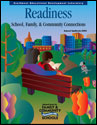
|
| Reading Assessment Database for Grades PreK–3 (2006) This database, a complementary tool to the Cognitive Foundations of Learning to Read: A Framework, enables reading teachers to search for preK–3 reading assessments that test the framework's 14 reading skills. | 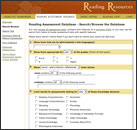
|
| Reading First Notebook: The Newsletter for the Reading First Program (2005) The Reading First Notebook was published on a quarterly basis from 2004 to 2006, and is now available online for download in pdf format. The newsletter provided thematic issues covering topics such as assessment, professional development, and instruction for special population students. | 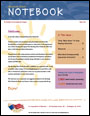
|
| Realizing School Improvement through Understanding the Change Process: Issues About Change, Volume 1, Number 1 (1990) This paper focuses on two important questions that you need to answer when implementing successful school change: What exactly is the innovation? What happens to the educators who implement new programs and ideas in their schools and classrooms? | 
|
| Registry of Systematic Reviews (2009) This registry, produced in part by SEDL’s National Center for the Dissemination of Disability Research (NCDDR), provides access to quality systematic reviews of disability and rehabilitation research studies. The studies address topics relevant to researchers, service providers, and people with disabilities and their families. | 
|
| REL 2004 Policy Forum - Closing the Achievement Gap: School Resources and Beyond (2004) From 2001-2005, SEDL invited a regional network of education policymakers and influencers to an annual policy forum. These policymakers come from state departments of education, legislative committees, and governor's offices in the five states in the region: Arkansas, Louisiana, New Mexico, Oklahoma, and Texas. The participants exchanged information on topics of common interest, and also heard about the latest developments in research, policy, and practice from national experts on the topics featured. The Policy Forums held during SEDL’s 2001-2005 Regional Educational Laboratory contract with the U.S. Department of Education focused on the topics of school finance, instructional spending, teacher quality, and student achievement. This forum was help on September 27-28, 2004 in Austin, TX. | 
|
| REL 2005 Policy Forum - Pay and Performance: Teacher Resource Policy (2005) From 2001-2005, SEDL invited a regional network of education policymakers and influencers to an annual policy forum. These policymakers come from state departments of education, legislative committees, and governor's offices in the five states in the region: Arkansas, Louisiana, New Mexico, Oklahoma, and Texas. The participants exchanged information on topics of common interest, and also heard about the latest developments in research, policy, and practice from national experts on the topics featured. The Policy Forums held during SEDL’s 2001-2005 Regional Educational Laboratory contract with the U.S. Department of Education focused on the topics of school finance, instructional spending, teacher quality, and student achievement. This forum was help on September 29-30, 2005 in Albuquerque, New Mexico. |
|
| Research on the Brain: Classroom Compass - Volume 3 Number 2 (1997) This newsletter for teachers highlights some relevant theories and findings from cognitive research and links them to classroom applications. | 
|
| Research-Based Strategies for Teaching Social Studies, Science, and Mathematics to ELs at the Secondary Level: Texas Comprehensive Center Briefing Paper, Number 9 (2012) This article provides useful research-based information for educators and others seeking to support English learners (ELs) at the secondary level in social studies, science, and mathematics. The article may also prove helpful for those who would like to learn about factors that influence the educational achievement of this significant and growing number of students. Furthermore, the authors provide some general strategies used in English as a Second Language (ESL) programs to demonstrate the distinction between ESL and the content needs of ELs. | 
|
| Response to Intervention (RtI) 2009 Regional Summit on Funding Models (2009) The objectives of the Response to Intervention Summit on Funding Models were to increase knowledge of funding models for RtI implementation, to develop strategies and action steps for addressing RtI funding, and to increase networking opportunities for improved implementation of funding models | 
|