
SEDL's Free Magazines/Newsletters for Mathematics and Science
Mathematics and Science
Magazines/Newsletters
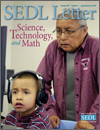
In this issue of SEDL Letter, we address challenges and solutions related to science, technology, engineering, and Math (STEM) instruction. We describe three different professional development projects, where SEDL content experts are helping teachers provide instruction in math, science, and technology—or some combination of the three—more effectively and in a more integrated way. We examine the importance of evaluation in helping educators identify and meet goals on STEM-related projects. We also review a research report on ways that instructors can engage students, especially those who are underrepresented in STEM fields.
Student effort matters! This is just one of the findings of the National Mathematics Advisory Panel in its 2008 report titled Foundations for Success—The Final Report of the National Mathematics Advisory Panel. This 120-page report addresses one central question: How can schools in the United States improve mathematics curriculum, instruction, assessment, teacher training and support so that all American students learn mathematics so that they can compete with students from other nations? In the report, the advisory panel discusses 45 findings and recommendations on key topics, such as instructional practices, materials, professional development, and assessments. The authors stress the importance of knowledgeable teachers, effective instruction, effective assessment, and the need for rigorous research in mathematics education.
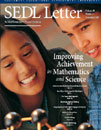
This issue of SEDL Letter examines issues related to improving math and science achievement, including the importance of providing a foundation in algebraic thinking well before high school.
This newsletter issue demonstrates some of the factors all good field trips share and what teachers, principals, and students can do to make sure a field experience enhances classroom learning.
This issue of Classroom Compass focuses on the Alvord School in Santa Fe, New Mexico, where instructors are using dance and music to make math more engaging for students.
This newsletter for teachers highlights some relevant theories and findings from cognitive research and links them to classroom applications.
This newsletter for teachers features Using Community Resources to Enhance Mathematics and Science Education, an introduction to SCIMAST's Directory of Science-Rich Resources.
This newsletter for teachers concentrates on discovering new science understanding which focuses on science and mathematics for all.
This newsletter's main article, Working for Reform, looks at the idea of teacher as facilitator - a basic part of the reformed classroom.